

Ask the question. Simulate the answer.
Describe the decision you're facing. Spenta frames it, builds the model, and runs it with you — right here.
A storm could close the road to one of our depots tomorrow. Do we reroute, or move stock there tonight?
SpentaBoth, side by side. Build the closure on your network, run the reroute and the extra stock against the same orders, then see which customers run short under each, for how long, and what each option costs.
How could we reduce peak queues without simply adding more staff?
SpentaWe model the whole place first: who comes through the doors and when, then the ticket hall and café counters they use. Then we compare a layout change, a different staff mix and self-service on the same arrivals, and show where the wait moves.
We're adding a third robot palletizer. Will it lift output, or will the dock cap us anyway?
SpentaWe build the line from the packers to the dock: the conveyors, the palletizers, the people at rework and the vehicles to the trucks. Then we run today's line, a third palletizer and a bigger buffer against the same orders, and show where each one stops.
Illustrative conversation. The footage is recorded from the model we're building.
Peak is eight weeks out. Do we add mobile robots, or will packing and the sorter cap us anyway?
SpentaWe build the floor from the inbound door to the outbound truck: the racks and tote store, the robots and their chargers, the conveyors and sorter, and the people at every station. Then we run today's fleet, more robots and another packing station against the same peak orders, and show where each one stops.
Illustrative conversation. The footage is recorded from the model we're building.
You stay in control. Always.
Every assumption Spenta makes is visible — you can see it, question it, and change it before you trust the answer. A person reviews every model before it's used to decide anything. Your data stays yours.
See how we handle trust and data →Open the hood. Every step, visible.
Domains
One simulation engine. One agent. Many domains.
 Networks across marketsThe whole network with orders moving
 Growth and plant capacityThe network with orders moving
 Sites after growth and acquisitionsOne site out, two others take its load
 Stock and replenishmentFrom the network into one distribution center
 Disruption and recoveryA road closes and the order waits
Recorded replay · Imagery: USGS The National Map. Road geometry © OpenStreetMap contributors. Globe: NASA Blue Marble.
 Stadiums and arenasCrowd through the doors
 Transport hubsThe platform filling, then boarding
 Museums, exhibitions and pop-upsA wave of riders off a train crossing the square past the doors
 Restaurants and retailThe café line and pickup, colour shows what each customer is doing
 Visitor attractions and hospitalityThe café terrace, colour shows what each guest is doing
Recorded · short cut
 Robot cells and cobotsThe arm sorts each box to the robot or the belt
 Mobile robots and AGVsThe loaded robot drives its box to the dock
 Conveyors and end of lineCartons off the end of the line, stacked onto a pallet; the hall is a backdrop
 People, skills and shiftsPeople at rework and mixed orders beside the robots
 Mix, sequence and changeoversA sorter sending each product to its lane
Illustration · short clip
 Conveyors and sortationTotes from two infeeds merging and passing the scan arch; the hall is a backdrop
 Racks and automated storageThe crane stores one tote and fetches another
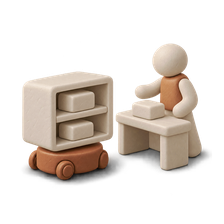 Mobile robots and goods-to-personRobot carts bring totes to the pickers; the hall is a backdropPeople, skills and shiftsA worker takes cases off the rack and builds a pallet; the hall is a backdrop
 Docks, waves and cutoffCartons sorted to four dock lanes; the hall is a backdrop
Illustration · short clip